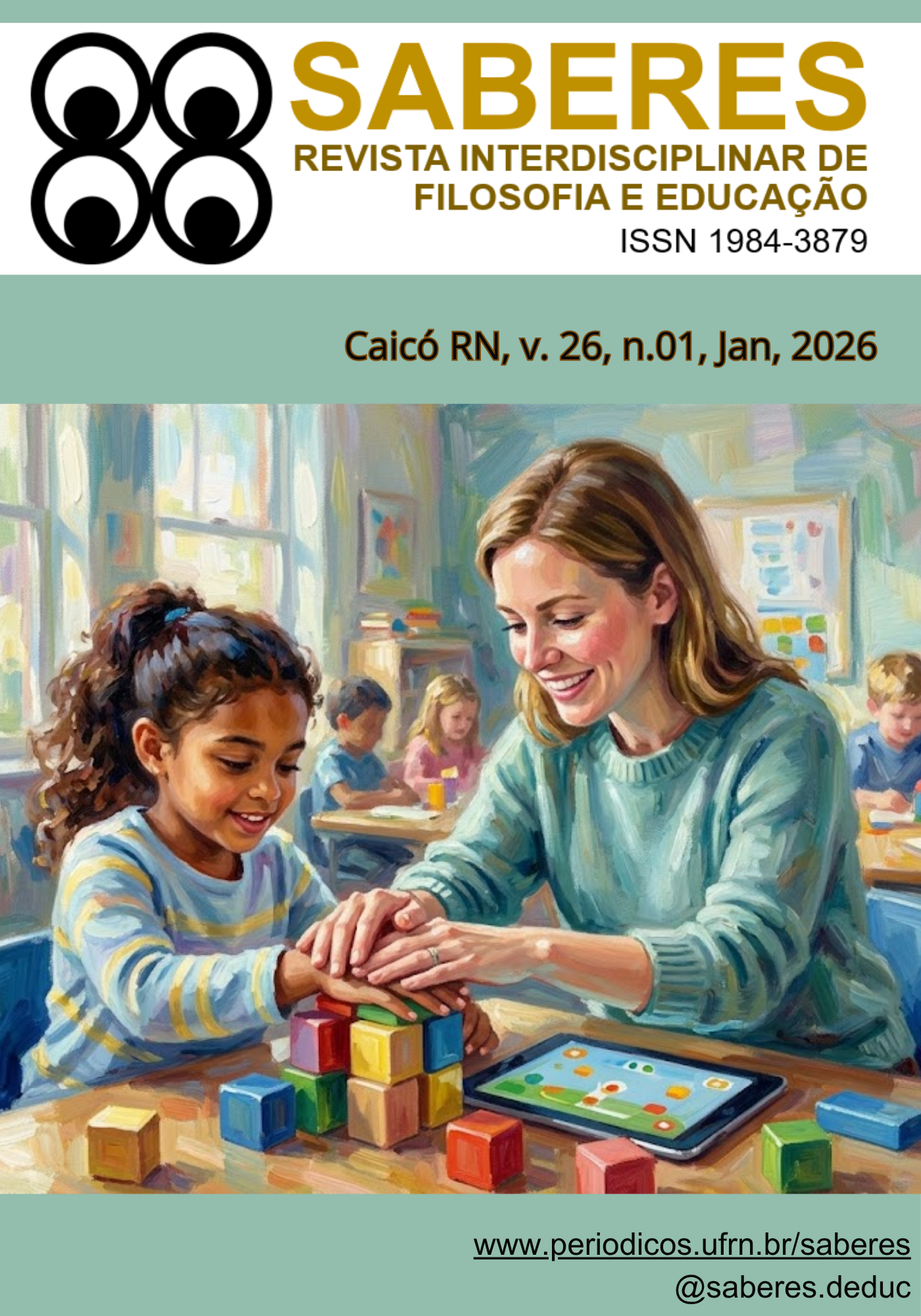
A IMPORTÂNCIA DA GAMIFICAÇÃO EM SALA DE AULA COM CRIANÇAS DE NÍVEIS DE APRENDIZAGEM DE LEITURA E ESCRITA DISTINTOS
UMA EXPERIÊNCIA DO PIBID PEDAGOGIA UFRN-CAICÓ
DOI:
https://doi.org/10.21680/1984-3879.2026v26n1ID43907Keywords:
gamificação, leitura, escritaAbstract
This article studies the use of gamificacion as a pedagogical strategy in the teaching of reading and writing in a 3rd-grade class of elementary School, composed of children with different learning levels. The objective is to understand how characteristic elements of gamification, such as challenges, rewards, cooperation, and narratives, contribute to the motivation, engagement, and active participation of students. The study is based on the analysis of an experience developed within the Institutional Scholarship Program for Teaching Initiation (PIBID) of the pedagogy course at UFRN/Caicó-RN. Methodologically, this study is a qualitative approach (Minayo, 2001), with a case study design (Yin, 2015), the main data source is the field diary entries made by the two undergraduate teaching trainees (authors of this work), supplemented by participant observations of pedagogical practices conducted between July and November 2024. Data análisis was performed using thematic content analysis (Bardini, 2011), allowing for the interpretation of empirical records in light of theoretical framework on gamification (Moran, 2018); playfulness (Kishimoto, 2017); reading (Soares, 2003); and children’s literature (Cosson, 2006; Zilberman, 2003). The results show that gamification contributed to the construction of a more dynamic, participatory, and collaborative learning environment, favoring the appreciation of each child’s unique characteristics. Furthermore, the development of socio-emotional skills, such as cooperation, autonomy, and persistence in the face of challenges, was observed. It is concluded that gamification is a powerful pedagogical strategy, especially in contexts marked by heterogeneity learning.
Downloads
References
BACICH, Lilian; MORAN, José (Org.). Metodologias ativas para uma educação inovadora: uma abordagem teórico-prática. Porto Alegre: Penso, 2018.
BARDIN, Laurence. Análise de conteúdo. São Paulo: Edições 70, 2011.
COELHO, Nelly Novaes. Literatura infantil: teoria, análise, didática. 1. ed. São Paulo: Moderna, 2000.
COSSON, Rildo. Letramento literário: teoria e prática. São Paulo: Contextos, 2006.
FARDO, Marcelo Luis. A gamificação aplicada em ambientes de aprendizagem. RENOTE: Revista Novas Tecnologias na Educação, Porto Alegre, v. 11, n. 1, p. 1-10, jul. 2013.
GALVÃO FILHO, T. R. T. Educação Inclusiva e Tecnologias: caminhos e perspectivas. Brasília: MEC/SEESP, 2012.
GATTI, Bernadete A. Formação inicial de professores para a educação básica: pesquisas e políticas educacionais. Estudos em Avaliação Educacional, São Paulo, v. 25, n. 57, p. 24-54, jan./abr. 2014.
KISHIMOTO, Tizuko Morchida. Jogo, brinquedo, brincadeira e a educação. 14. ed. São Paulo: Cortez, 2017.
LÜCK, Heloísa. Pedagogia interdisciplinar: fundamentos teórico-metodológicos. 2. ed. Petrópolis, RJ: Vozes, 2007.
MACHADO, N.J. Educação: projetos e valores. São Paulo: Escrituras Editora, 2000.
MANTOAN, M. T. E. Inclusão escolar: o que é? Por quê? Como fazer? São Paulo: Moderna, 2003.
MINAYO, Maria Cecília de Souza (Org.). Pesquisa social: teoria, método e criatividade. 18. ed. Petrópolis: Vozes, 2001.
MORAN, José. Metodologias ativas de bolso: como os alunos podem aprender de forma ativa, significativa e profunda. São Paulo: Editora do Brasil, 2019.
MORAN, J. Metodologias ativas para uma aprendizagem mais profunda. Educatrix – Dossiê Currículo. São Paulo: Moderna, a. 7, n. 12, p. 66-69, 2013.
PIMENTA, Selma Garrido; LIMA, Maria Socorro Lucena. Estágio e docência. São Paulo: Cortez, 2012.
SOARES, Magda. Alfabetização e letramento. São Paulo: Contexto, 2003.
SOARES, Magda. Letramento: um tema em três gêneros. 2. ed. Belo Horizonte: Autêntica, 2004.
SASSAKI, R. K. Inclusão: construindo uma sociedade para todos. Rio de Janeiro: WVA, 1997.
UNESCO. Declaração de Salamanca e Linha de Ação sobre Necessidades Educativas Especiais. Salamanca: UNESCO, 1994.
VYGOTSKY, Lev Semionovich. A formação social da mente: o desenvolvimento dos processos psicológicos superiores. 6. ed. São Paulo: Martins Fontes, 1998.
YIN, Robert K. Estudo de caso: planejamento e métodos. 5. ed. Porto Alegre: Bookman, 2015.
ZILBERMAN, Regina. A literatura infantil na escola. 11. ed. São Paulo: Global, 2003.
Downloads
Published
Versions
- 13-08-2026 (2)
- 17-06-2026 (1)
How to Cite
Issue
Section
License
Copyright (c) 2026 Maria Luiza Dutra da Silva, Nataly Laissa Ferreira da Silva , Jacicleide Ferreira Targino da Cruz Melo, Isabela Cristina

This work is licensed under a Creative Commons Attribution-NonCommercial-ShareAlike 4.0 International License.
Este obra está licenciado com uma Licença Creative Commons Atribuição 4.0 Internacional.
Autores que publicam nesta revista concordam com os seguintes termos:
a. Autores mantém os direitos autorais e concedem à revista o direito de primeira publicação, com o trabalho simultaneamente licenciado sob a Licença Creative Commons Attribution 4.0 que permite o compartilhamento do trabalho com reconhecimento da autoria e publicação inicial nesta revista.
b. Autores têm autorização para assumir contratos adicionais separadamente, para distribuição não-exclusiva da versão do trabalho publicada nesta revista (ex.: publicar em repositório institucional ou como capítulo de livro), com reconhecimento de autoria e publicação inicial nesta revista.
c. Autores têm permissão para publicar e distribuir seu trabalho online (ex.: em repositórios institucionais ou na sua página pessoal) após a publicação inicial nesta revista, já que isso pode gerar alterações produtivas, bem como aumentar o impacto e a citação do trabalho publicado (Veja O Efeito do Acesso Livre).
Foram feitos todos os esforços para identificar e creditar os detentores de direitos sobre as imagens publicadas. Se tem direitos sobre alguma destas imagens e não foi corretamente identificado, por favor, entre em contato com a revista Saberes e publicaremos a correção num dos próximos números.

 English
 Español (España)
 Português (Brasil)