Personal archive of women teachers: school notebooks and the preservation of sources for the history of education
DOI:
https://doi.org/10.21680/2596-0113.2026v9n1ID43696Keywords:
Personal archives, Teachers’ documents, MemoryAbstract
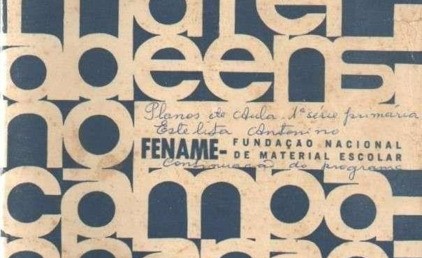
The study is the result of research conducted during a postdoctoral fellowship in the Graduate Program in Education (PPGED) at the Federal University of Rio Grande do Norte (UFRN) and aims to collect, preserve, organize, and make accessible documents dating from the 1940s to the 1970s found in the archive of teacher Estelita Antonino de Souza. To this end, it was structured as a historical-documentary and archival investigation focused on the constitution, preservation, and problematization of sources for writing the history of education. The research involves a historiographical operation of selecting, classifying, describing, and interpreting sources, understanding the personal archive as a space for the production of memory, representations, and traces of the educational and cultural practices of a specific historical period. From a methodological perspective, the classification of the collection involves cleaning, quantification, and typological and thematic analysis of the documents. The organization process takes both thematic discussion and document types as its reference points. The documents in the teacher’s archive point to her life trajectory, as well as to the gestures, habits, and values of the person who preserved them. School notebooks, understood as sources for historical and documentary research, provide evidence of aspects of the teaching profession, school culture, and pedagogical practices in the context under study. Thus, the research highlights the relevance of using personal archives for writing history and emphasizes the importance of women teachers’ archives for the history of education. Moreover, personal papers, due to the diversity that characterizes them, enrich the information found in official archives and reveal topics that may be of interest to researchers in history, particularly the history of education, thereby constituting valuable research sources.
Downloads
References
Bellotto, H. L. (2002). Como fazer análise diplomática e análise tipológica de documento de arquivo (Coleção Como Fazer, 8). Arquivo do Estado; Imprensa Oficial do Estado.
Bellotto, H. L. (2004). Arquivos permanentes: Tratamento documental (2ª ed.). Fundação Getúlio Vargas.
Burke, P. (Ed.). (1992). A escrita da história: Novas perspectivas (2ª ed.). Editora UNESP.
Camargo, A. M. de A. (Coord.). (1996). Diagnóstico dos arquivos da Faculdade de Filosofia, Letras e Ciências Humanas da Universidade de São Paulo. FFCL/USP.
Camargo, A. M. de A. (2009). Arquivos pessoais são arquivos. Revista do Arquivo Público Mineiro, 45(2), 26–39.
Camargo, A. M. de A., & Bellotto, H. L. (Orgs.). (1996). Dicionário de terminologia arquivística. Secretaria da Cultura.
Chartier, A.-M. (2007). Os cadernos escolares: Organizar os saberes, escrevendo-os. Revista de Educação Pública, 16(32), 13–33.
Chartier, A.-M. (2011). Um dispositivo sem autor: Cadernos e fichários na escola primária. Revista Brasileira de História da Educação, 11(1), 9–26.
Chartier, R. (1989). A história cultural: Entre práticas e representações (2ª ed.; M. M. Galhardo, Trad.). DIFEL.
Chartier, R. (2001). Cultura escrita, literatura e história (E. Rosa, Trad.). Artmed.
Ducrot, A. (1998). A classificação dos arquivos pessoais e familiares. Estudos Históricos, 11(21), 151–168.
Goodson, I. F. (1992). Dar voz ao professor: As histórias de vida dos professores e o seu desenvolvimento profissional. In A. Nóvoa (Ed.), Vidas de professores (2ª ed., pp. 63–78). Porto Editora.
Gvirtz, S. (1999). El discurso escolar a través de los cuadernos de clase. Editorial Universitaria de Buenos Aires.
Heymann, L. Q. (1997). Indivíduo, memória e resíduo histórico: Uma reflexão sobre arquivos pessoais e o caso Filinto Müller. Estudos Históricos, 10(19), 41–66.
Heymann, L. Q. (2008). Arquivos e interdisciplinaridade: Algumas reflexões. In Anais do Seminário CPDOC 35 Anos: A interdisciplinaridade nos estudos históricos. CPDOC/FGV. http://www.cpdoc.fgv.br
Julia, D. (2001). A cultura escolar como objeto histórico. Revista Brasileira de História da Educação, 1, 9–43.
Mignot, A. C. V. (Org.). (2008). Cadernos à vista: Escola, memória e cultura escrita. EdUERJ.
Mignot, A. C. V., & Cunha, M. T. S. (2006). Razões para guardar: A escrita ordinária em arquivos de professores/as. Revista Educação em Questão, 25(11), 40–61.
Viñao, A. (2008). Os cadernos escolares como fonte histórica: Aspectos metodológicos e historiográficos. In A. C. V. Mignot (Org.), Cadernos à vista: Escola, memória e cultura escrita (pp. 15–33). EdUERJ.
Downloads
Published
How to Cite
Issue
Section
License
Copyright (c) 2026 Francymara Antonino Nunes de Assis

This work is licensed under a Creative Commons Attribution 4.0 International License.
Autores que publicam nesta revista concordam com os seguintes termos:
Autores mantém os direitos autorais e concedem à revista o direito de primeira publicação, com o trabalho simultaneamente licenciado sob a Licença Creative Commons — Attribution 4.0 International — CC BY 4.0 que permite o compartilhamento do trabalho com reconhecimento da autoria e publicação inicial nesta revista.
Autores têm autorização para assumir contratos adicionais separadamente, para distribuição não-exclusiva da versão do trabalho publicada nesta revista (ex.: publicar em repositório institucional ou como capítulo de livro), com reconhecimento de autoria e publicação inicial nesta revista.
Autores têm permissão e são estimulados a publicar e distribuir seu trabalho online (ex.: em repositórios institucionais ou na sua página pessoal) a qualquer ponto antes ou durante o processo editorial, já que isso pode gerar alterações produtivas, bem como aumentar o impacto e a citação do trabalho publicado.
 Português (Brasil)
 English
 Español (España)
 Français (Canada)