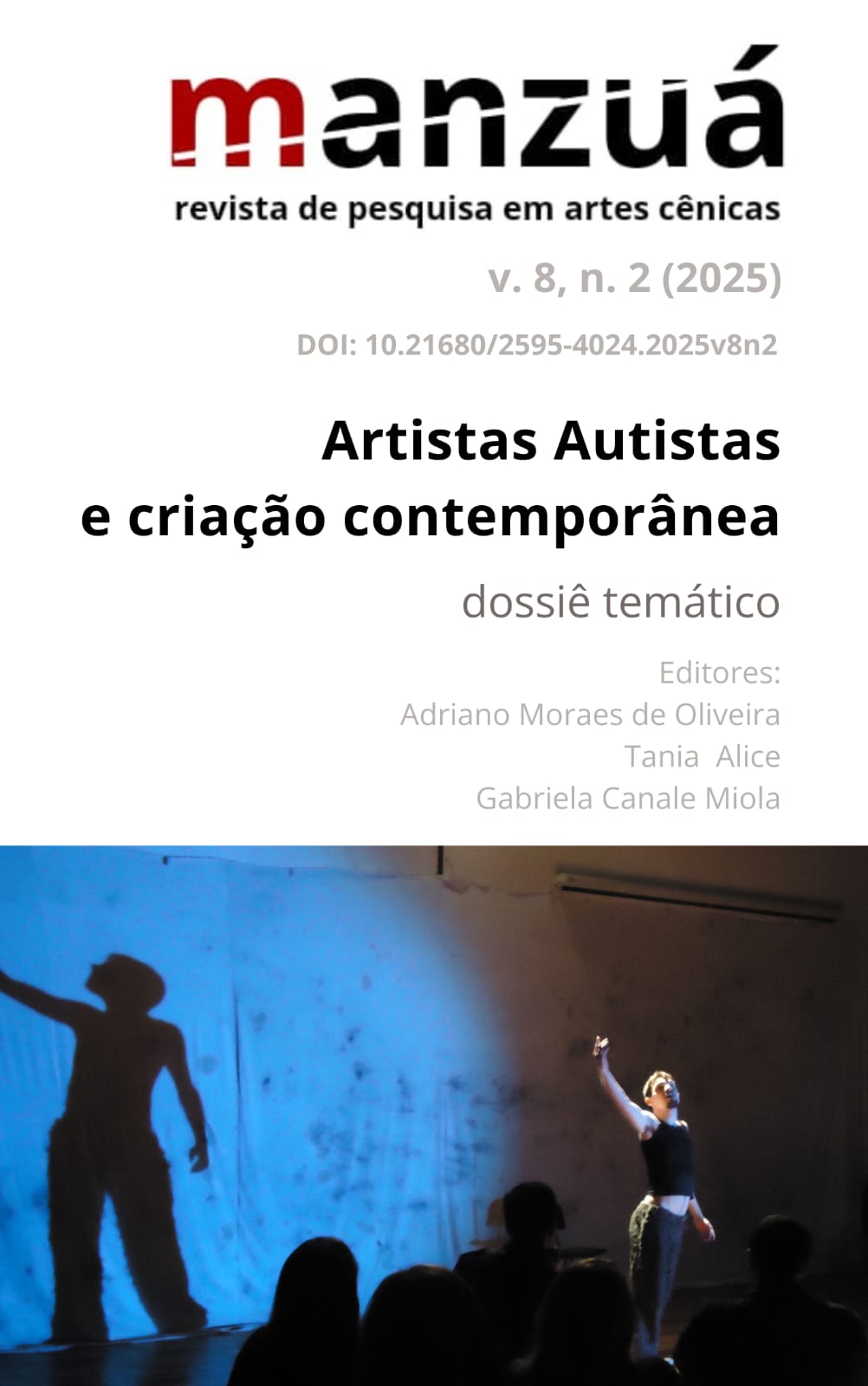
SER ARTISTA E AUTISTA NO QUE RESTOU DA MATA ATLÂNTICA
DOI :
https://doi.org/10.21680/2595-4024.2025v8n2ID42374Résumé
Este texto compartilha investigações ecoperformativas de uma artista autista no que restou da Mata Atlântica. A partir da experiência de ser artista-professora-autista e das práticas do Laboratório de Ecoperformance da UFSC, propõe-se compreender a ecoperformance como um modo de atenção, ética e regulação. Em vez de tratar o ambiente como cenário ou recurso, as investigações partem do compartilhamento de processos com os ecossistemas, reconhecendo água, rochas, plantas como coautores, mestres e ecoreguladores. As experiências mostram que corpos autistas — tratados pela lógica capacitista como inadequados — encontram nos biomas condições de eco-regulação, ajustando ritmo, presença e percepção a ambientes que reduzem sobrecarga, estabilizam o sistema nervoso e produzindo regulação e aprendizados.
Téléchargements
Téléchargements
Publié-e
Comment citer
Numéro
Rubrique
Licence
© Gabriela Canale Miola 2025

Cette œuvre est sous licence Creative Commons Attribution - Pas d'Utilisation Commerciale - Partage dans les Mêmes Conditions 4.0 International.
Autores que publicam nesta revista concordam com os seguintes termos:
Autores mantém os direitos autorais e concedem à revista o direito de primeira publicação, com o trabalho simultaneamente licenciado sob a Licença Creative Commons Attribution que permite o compartilhamento do trabalho com reconhecimento da autoria e publicação inicial nesta revista.
Autores têm autorização para assumir contratos adicionais separadamente, para distribuição não-exclusiva da versão do trabalho publicada nesta revista (ex.: publicar em repositório institucional ou como capítulo de livro), com reconhecimento de autoria e publicação inicial nesta revista.
Autores têm permissão e são estimulados a publicar e distribuir seu trabalho online (ex.: em repositórios institucionais ou na sua página pessoal) a qualquer ponto antes ou durante o processo editorial, já que isso pode gerar alterações produtivas, bem como aumentar o impacto e a citação do trabalho publicado (Veja O Efeito do Acesso Livre).
 Português (Brasil)
 English
 Español (España)
 Français (Canada)